EVENTS LIKE POETRY PARNASSUS are bound to be something of a shock, sometimes a dismaying one, for a lot of practising poets and their readers. You spend a lifetime working away at something which obviously very few people want to know about and suddenly it seems it’s immensely popular all over the world. But there’s really no reason to be threatened by it. One thing it probably reveals is that poetry is much more of a public thing in most countries, especially those far away from here. Anyway, there have been such things before, called “Poetry Olympics”, etc., which similarly generate immense excitement, or are claimed to. They come, the thousands turn up and cheer, or stay at home and watch TV, they go away. Afterwards it is as if nothing has happened. Continue reading “Poetry Parnassus 2012: a further note.” »
[From the official announcement] The world’s poets are coming to London – meet them, hear them and celebrate with them at Southbank Centre. There are over 100 free events, activities and workshops happening every day throughout the festival. Continue reading “Event: Poetry Parnassus. London 26 June – 1 July 2012.” »
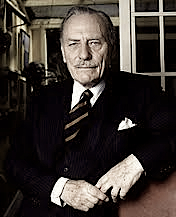
 By PETER OBORNE [The Telegraph] – For years, Enoch Powell has been a monstrous figure in British politics. Even the mention of his name has been enough to invite damnation by association. Before the last election, David Cameron forced Nigel Hastilow to stand down as Conservative candidate for Halesowen after he praised Powell for being “right” about immigration.
This ugly background makes it extremely interesting that Iain Duncan Smith, one of our most senior cabinet ministers, should have written the introduction to a superb set of essays published to coincide with the 100th anniversary of Mr Powell’s birth on Saturday. Simply by lending his name to such a venture, Mr Duncan Smith is making an implicit claim to stand in some part of the Powell tradition. Even a decade ago it would have been career death for any mainstream politician to have done this, let alone a cabinet minister. Continue reading “The Voldemort of British politics can now be named.” »
By Ouida.
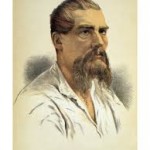 AT THIS MOMENT, when the name of Burton has been brought before the English public by a biography which fails lamentably to do justice to it, I venture to say a few words concerning one whom I knew well, from my own early life until his death, and who never failed to visit me on his returns to Europe. The English biographer has seldom been distinguished for skill in narrative, for terseness and lucidity in relation and representation; he generally wanders over too much ground, collects too many facts, arranges them loosely, and oscillates between to much description and too little; seems too afraid to be morally responsible for his hero, and generally washes all color out of his portrait. Continue reading “Sir Richard Francis Burton.” »
By MICHAEL WRAY [Time] – For most non-American visitors, the journey to North Korea begins with a train ride harking back to the mid–20th century: a diesel locomotive drags boxy carriages crammed with soldiers from Sinuiju, which sits across the Yalu River from China, south toward Pyongyang. American citizens, who are only allowed to arrive by plane, miss the five hours of North Korean scenery: peasants trudging through knee-deep mud, furrowed fields and rows of squat, cement buildings. Peasants wear khaki-and-blue clothes. Red flags dot the landscape. Continue reading “Playing for par in Pyongyang.” »
By JAMES MUSSELL [jimmussel.com] – My recent book, The Nineteenth-Century Press in the Digital Age (Palgrave, 2012), opens with a discussion of the way Amazon market their Kindle….Throughout [Amazon’s product description], the Kindle is described in relation to the book. It is a ‘convenient portable reading device’ that offers ‘an exceptional reading experience’. Its ‘electronic paper’ makes screen-reading ‘as sharp and natural as reading ink on paper’. It can be located in usual sites of reading: over breakfast, during the commute, on a journey, for the book club. Yet there is an interesting ambiguity here. Kindle might offer a ‘reading experience’, but it is the device that is called the reader, not the user. Open the box, for instance, and there is a user guide, not a reader guide: the implication is that users already know how to read, but might not know how to use. This is a point of anxiety, as it reminds potential customers of the strangeness of technology. If Kindle is like a book, but better, Amazon don’t want to remind readers that what makes it better is also what makes it strange… Continue reading “Kindles, monitors, books, bookmarks, and other disappearing objects.” »
By LIAM HALLIGAN [The Telegraph] – Let what is now happening in Europe serve as a reminder, a 28 million decibel wake-up call that serious economic debate matters and matters a lot. Attempts to dismiss or even suppress it, because it’s “hard” or “boring”, have very real human consequences…
We’ve ended up with a eurozone so replete with inherent contradictions that it threatens now to spark financial meltdown across Europe and serious civil unrest. Global financial markets are in a trance, a paralysis of fear and confusion. With politicians and policy-makers now finally admitting the jumped-up dismal scientists are correct, and “Grexit” could happen, investors in Europe and elsewhere are slashing their euro exposure. Continue reading “The drachma and the dominoes.” »
 [From a 1996 Humanities interview with Paul Fussell by Sheldon Hackney] – Everybody believes that life is pleasurable, and they should. They have a right to believe that, especially if they’re brought up under a Constitution that talks about the pursuit of happiness. To have public life shot through with that kind of optimism and complacency is the grounds for horrible, instructive irony when those generalities prove not true. War tends to prove them not true. War is about survival and it’s about mass killing and it’s about killing or being killed – that is, in the infantry – and it is extremely unpleasant. One realizes that a terrible mistake has been made somewhere, either by the optimistic eighteenth century or by mechanistic twentieth century. The two don’t fit together somehow, and that creates, obviously, irony. Continue reading “Paul Fussell and the protecting irony of chronological dissonance.” »
[Organization for Economic Cooperation and Development website] – For much of the 20th century, economy and science played safe, taking the view that you could not go far wrong if you measured in terms of monetary value, immune to the vagaries of the human heart. So gross domestic product (GDP) measured the value of the goods and services a country produced, from corn to cars, coal to customer services, and measured progress by how far or fast it grew from year to year, and in comparison to other countries.
By the turn of the century, it was becoming clear that GDP was an increasingly inadequate tool even in purely economic terms; in a knowledge-driven Internet age, economic success depended on elements that were not being measured in GDP, such as the education level of the workforce, their health, and whether the whole system was sustainable in terms of the way we were using natural resources… Continue reading “What kind of happiness leaves no room for puppies and warm guns?” »
By LAWRENCE SOLOMON [Financial Post] – Somalia is today a hotbed of piracy and al-Qaeda-linked terrorists; a country that over the last two decades has endured near-continual war causing hundreds of thousands to die from violence and starvation, and a million to flee to other lands; a country of the impoverished, almost half of whom live on less than $1 a day. In the absence of good governance, any attempt to divide Somalia’s wealth among BP, Shell, and the other large and small players that are jockeying for position is likely to spell doom, particularly now that the stakes have been raised. Continue reading “The make-believe ‘nation’ of Somalia.” »
By STEVE KNOPPER [Wall Street Journal] – As skateboarding grew, from suburban pockets of punk-rock kids scraping up empty pools and parking lots to a multibillion-dollar industry, Mr. Payne evolved into a world-class ramp builder. He saw things nobody else could. In 1987, for a video called “The Search for Animal Chin,” Mr. Payne built a spine ramp, which stitched together two wide “pools” into a curvy “W” shape, with a platform in the middle. The video became a cult film, and every skateboarder immediately wanted to ride his ramp. Today, his 15-year-old Team Pain, based in an office park in Winter Springs, Fla., is the go-to company for cities that crave skate parks built by actual skaters. Mr. Payne, 52, has overseen 250 of them. Continue reading “Among the unnatural ‘cravings’ of city politicians: skate parks.” »
By MICHAEL AGRESTA [Slate] – As we move into the digital age, the well-made copy has come to occupy a familiar, almost nostalgic middle ground between the aura of an original and the ghostly quality of a computer file. A mass-produced paper book, though bulkier and more expensive, may continue to be more desirable because it carries with it this material presence. And presence means something—or it can, at least, in the hands of a good book designer. Continue reading “Darwinian publishing and the future of the novel.” »
By DENIS BOYLES [National Review] – The news in Europe now is dominated by François Hollande…But it was far less a victory for Hollande than a defeat for Sarkozy, who had entered office as an anti-establishment candidate, fighting his way to the top over the strong objections of his own party’s elite. In fact, the victory was so imaginary that to celebrate last night, France 24 reported, “Thousands storm Bastille for left’s long-expected party.” Some ideas die hard. Continue reading “Nicolas Sarkozy as George H.W. Bush in translation.” »
By ELLEN MOODY [Ellen and Jim] – One area we’ve begun to discuss is the long TV mini-series, or the experience and art of watching the serial instalments of a multi-hour story, and I invite my students (and all readers) to read and comment. The following comes from viewing many many mini-series over years (especially my study of the Pallisers), but most recently Poldark, Small Island and Downton Abbey. It’s heavily indebted to Robert C. Allen’s “A Reader-Oriented Poetics of the Soap Opera” found in Marcia Landry’s Imitation of Life, an anthology of film studies. I write this blog to help my students in the last part of our term together. Continue reading “Dickens in the details at Downton.” »
(Lines on the loss of the Titanic)
By Thomas Hardy.
I.
In a solitude of the sea
Deep from human vanity,
And the Pride of Life that planned her, stilly couches she.
II.
Steel chambers, late the pyres
Of her salamandrine fires,